
Is It a Buyer’s or Seller’s Market in Summerville, SC? What 7% Mortgage Rates Mean for You
Mortgage rates have climbed above 7% for the first time since January, putting additional pressure on homebuyers already dealing with rising everyday expenses. With gas prices reaching seasonal highs and the Federal Reserve raising interest rates for the first time in three years, the housing market is facing another shift. Yet in Summerville, some sellers are still pricing their homes based on the peak market conditions of 2022, even as today's buyers become more cautious and payment-conscious.
So, is the current mortgage rate environment creating a buyer's market or putting more pressure on sellers? I asked the local loan officers I work with every week, and their answers weren't the same. In this article, we'll break down how rising mortgage rates are affecting the Summerville, SC real estate market, what they mean for home prices and buyer purchasing power, and which side currently has the negotiating advantage.
I work in this market every day. As a homeowner with a mortgage and a family of five kids, I understand how rising costs affect real-life housing decisions. What I'm sharing isn't just market theory. It's what I'm seeing firsthand in Summerville, Cane Bay, and throughout the Charleston tri-county area. Let's look at what these changes mean for local buyers and sellers, and how you can make the most of today's market.
Table of Contents
- What Actually Just Happened with Mortgage Rates
- Summerville: What 7% Rates Do to Your Buying Power
- Cane Bay: Why Resale Sellers Are Fighting an Uphill Battle
- The Lender Who Said It's Not a Rate Problem
- The Smartest Answer: It's a Negotiation Problem
- The Rising Cost of Everything Else
- Who Actually Wins in Summerville Right Now
- Conclusion
What Actually Just Happened with Mortgage Rates
Before we pick a winner, let me explain what happened. The way the news covers this, you'd think rates just woke up one morning and chose violence. Here's the short version.
Freddie Mac's weekly number, that's the one everybody quotes, hit 7.03% for the week ending September 24th. That was the fifth straight week of rates just going up. A year ago, that same number was 6.30%. And Freddie Mac is the polite number. Mortgage News Daily had the 30-year at 7.58% on Tuesday. Bankrate's survey this week was 7.38%. So depending on who you ask, rates are somewhere between ouch and are you serious?
Why? Because mortgage rates don't actually follow the Fed directly. They follow the bond market, specifically the 10-year Treasury. And the 10-year just hit its highest level in nearly 20 years. Investors are nervous about inflation. Inflation's been stubborn. Gas is up because of everything going on in the Strait of Hormuz. When investors get nervous, they demand more money to lend you money. That's it. That's the whole economy. Everyone's nervous and you're somehow paying for it.
Then on September 16th, the Fed raised its rate a quarter point, first hike since 2023. The Fed's own projections have most of the committee expecting at least one more hike before the end of the year. One of my lender buddies, Chris Murray, put it perfectly on my Facebook post. He said the bond market is the best reality TV show of all time. He's right. It's *The Bachelor*, except every rose ceremony costs you $40 extra a month.
Here's the twist Chris pointed out, though. The Fed's favorite inflation report, the PCE report, dropped this week and came in cooler than expected: 3.4% instead of the 3.7% economists were bracing for. The market's odds of another Fed hike at the end of October dropped from around 70% earlier in the week to roughly 35%. So in one week we went from "they're definitely hiking" to "maybe December." That's not an economy. That's my wife Tasha deciding where we're eating dinner on a Friday night.
The bottom line: rates are high because inflation is sticky, and nobody, not me, not your lender, not the guy on TikTok with the whiteboard, knows exactly where they go next. Anyone who tells you they know is selling you something, and it's usually a course.
Look, if you're reading from Ohio or New Jersey wondering if Summerville even still makes sense at 7%, that's literally the conversation I have every week. It's also why I'm going to run real payment numbers instead of just yelling percentages at you. If you want to run those numbers, or you want help from my local lenders, reach out to me at 843-226-5535. But stick around first, because the next part is going to hurt a little.
Summerville: What 7% Rates Do to Your Buying Power
Let's make this real. The median sales price in Summerville is right around $400,000. The middle half of everything that sells here lands between about $330,000 and $475,000. That's our market. We're not Kiawah. Nobody in Summerville is buying a second home for the boat.
So $400,000 house. 10% down. $360,000 loan. Principal and interest only, no taxes, no insurance, no HOA. Because if I add those in, this blog goes from comedy to horror, and I like to keep these at least a little bit funny.
At 6.3%, roughly where Freddie Mac was a year ago, you're about $2,230 a month. At 7%, about $2,395 a month. At 7.5%, you're about $2,517 a month. Kind of missing those 5% days, aren't we?
Between a year ago and a bad day this week, that same house costs almost $290 more a month. That's about $3,400 a year. Over 30 years, if you never refinance, it's six figures. What's $290 a month in 2025? I have five kids. $290 is one trip to Chick-fil-A after church. That's it. That's one family meal where nobody gets a milkshake and somebody still cries. It's usually me. (I'm kidding. My family won't eat at Chick-fil-A. Too many additives.)
Now flip it around, because this is the part people miss. Say your budget is fixed. Your lender says you max out at around $2,230 a month. A year ago, that budget got you a $360,000 loan. At 7.5%, that same payment buys you roughly a $319,000 loan. You just lost about $40,000 of house. Not because the house got more expensive. Because the money did.
You didn't get priced out of Summerville. You got priced out of the extra bedroom. Which if you have kids means somebody's sharing a room, and that somebody is going to tell a therapist about it someday in 2041.
The Mortgage Industry Is Feeling It Too
The Mortgage Bankers Association said purchase applications hit their lowest level in two years. Fewer people are applying. Fewer people out touring. Fewer people at open houses eating the cookies. The rate isn't an abstract number. It's roughly $40,000 of buying power. Not your price, because the price is the thing that's going to have to give.
That right there is why my loan officer friends mostly said this is a seller's problem. Travis Walt Hall was the first one to answer my question on Facebook. He said he sees it mostly as a seller's problem and that the savvy buyer is going to see this as an opportunity that it truly is. Chris said the same thing. Seller problem for sure.
Here's the logic, and it's simple. If a buyer loses $40,000 of buying power, someone has to eat that $40,000. The buyer just can't. They literally don't have it. So it gets pushed onto the price. The seller is the one standing at the end of that line. Fewer buyers means longer days on market. Longer days on market means price reductions. Price reductions mean a seller who was planning to walk away with $120,000 in equity is now walking away with maybe $95,000 in equity and a very quiet drive home with their significant other.
Cane Bay: Why Resale Sellers Are Fighting an Uphill Battle
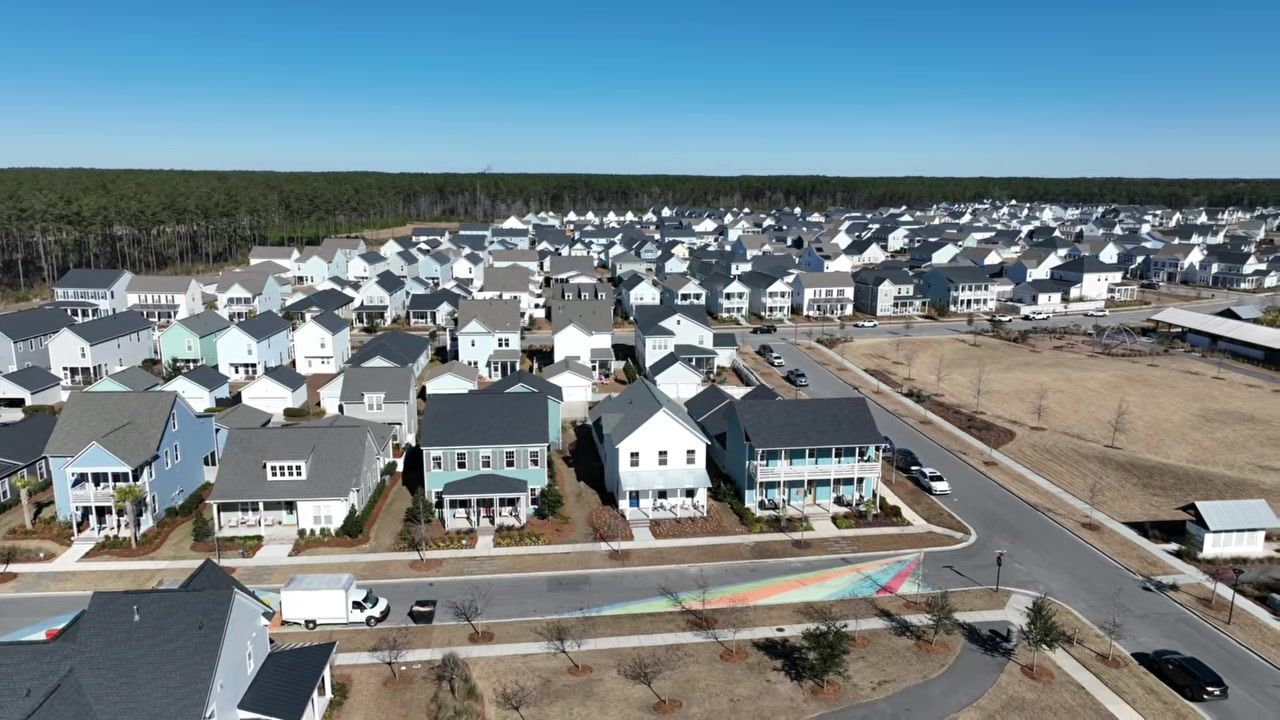
Here's what makes it especially rough for sellers in Summerville specifically. Stop scrolling. This is the most Summerville thing in this whole article.
In most towns, a resale seller is competing with other resale sellers. Not here. The National Association of Home Builders says 66% of builders offered sales incentives in September, the highest since last December. 38% straight up cut prices, and the average cut was 6%. Builder confidence is at its lowest point of the year.
Picture this: you're selling a 2018 house in Cane Bay. Nice house. Good shape. A mile away, a builder is selling a brand new version of basically the same floor plan with a rate buydown, closing costs paid, and a fridge. Your buyer is going to walk through your house, look at your carpet, and say, "The new one's got a warranty." And they're right. You don't have a warranty. You have a dog that pissed on the carpet in 2021, and you thought nobody would ever notice. Everybody noticed.
In Summerville, a resale seller isn't just fighting high rates. They're fighting a publicly traded company with a marketing budget and a quarterly earnings call. That's not a fair fight unless you price it right.
If you're thinking about buying in Summerville in the next six months, the worst thing you can do right now is sit on Zillow refreshing rates like it's a stock ticker. The best thing you can do is find out exactly what payment works for you, what builders are actually offering this month (because those incentives change constantly), and which resale sellers are getting nervous. That's the stuff that's not online.
If you're a seller, I'll tell you honestly whether your house is priced like it's 2022 or priced to actually sell in October 2025. You might not love the answer. But I'm going to be honest with you, and it's better than finding out after 90 days on the market when you end up dropping the price anyway. My number's on the screen and in the description. Text me the word "rates" and I'll know exactly which blog it came from. It comes straight to me, not a call center, not an assistant named Brittany. Me. Probably at a red light, but me.
The Lender Who Said It's Not a Rate Problem
Here's where it gets interesting, because not everybody agreed. Zach Cooper's comment got the most likes, and honestly, I think he was the most honest in the thread. Zach said basically we're back in the 2023 to 2024 era. Houses sit longer, which gives the buyers who can afford the higher payment a better opportunity, because some buyers are going to suffer depending on where they're looking.
Then he said the part that I think is the real truth: it's more of a home price problem than a rate problem. Combine that with more people struggling, consumer debt at record highs, and it makes for an interesting future for sure. That's lender talk for buckle up.
He's got a point. Let's look at the actual local numbers for the whole Charleston tri-county area. August data from the Charleston Trident Association of Realtors shows inventory at 5,593 homes, up 2.1%. Median price is at $431,500, up 1.8%. Days on market are 51 days, up 6%. Months of supply is 3.6 months.
Read that with me. Prices are still up, barely, but up. Inventory's up. Homes are sitting longer. That's not a crash. That's not a frenzy. That's a market that's been stuck in the middle for a while, getting slowly squeezed from both ends. Sellers who don't want to drop and buyers who can't stretch.
The Bigger Picture
Zach's right that rates aren't the whole story. Prices went up something like 40-plus percent in this area over the last six years. Insurance went up too. Taxes went up. Your HOA added a landscaping enhancement fee, which as far as I can tell means one guy named Dale now blows leaves twice a week instead of just once.
This isn't a crash and it isn't a boom. It's a grind. In a grind, the people who win are the ones who show up prepared: cash ready, payment known, and not emotionally attached to a 2022 price tag.
The Smartest Answer: It's a Negotiation Problem
Then Todd Triolo jumped into the chat and said, and I love this, it's not a buyer problem or a seller problem. It's a negotiation problem. (Winky face emoji, which from a loan officer is terrifying.)
His point was that rates make buyers more payment conscious, but they also make sellers more creative. Nobody can time the market, and if we had a crystal ball, we'd be picking lottery numbers. The goal is the right home, the right price, and a payment that makes sense. You get there with a loan officer and an agent who know how to make the numbers work.
Let me show you what making the numbers work actually means, because this is the stuff that can save you hundreds a month. Most buyers walk in and ask for a price reduction. Seems logical. But read this.
Say the seller is willing to give up about $8,400. Option 1: they knock $8,400 off the price at a 7% loan. That saves you about $56 a month. $56. That's a Publix sub and a sweet tea. Thank you for the sandwich.
Option 2: the seller puts the same $8,400 toward what's called a 2-1 buydown. That lowers your rate by 2 points the first year and 1 point the second year. On that $360,000 loan, year one at about 5% is roughly $1,930 a month instead of $2,395 a month. Year two at about 6% is roughly $2,160 a month. Year three and on, you're back to that full 7%, which is $2,395 a month.
Same $8,400 from the seller. One option saves you $56 a month. The other saves you about $465 a month for the first year. That's the difference between a buyer who asks for a discount and a buyer who knows how to negotiate after they know what the mortgage is going to look like.
Permanent Buydowns
The other move: permanent buydowns. That's paying points upfront to lower your rate for the life of the loan. Builders and sellers can sometimes fund those as well. Every lender prices them differently, so this is where a good loan officer actually earns their money. Ask yours to show you the price cut option, the temporary buydown, and the permanent buydown side by side. If they can't, get a different loan officer. I know several. Apparently they all follow me on Facebook.
In a 7% market, the price isn't the only thing you negotiate. It might not even be the main thing. The payment is the game.
The Rising Cost of Everything Else
We can't talk about rates without acknowledging the bigger joke here, which is that everything costs more and we're all just pretending to be fine with it. Gas hit $4.48 a gallon nationally last week, the highest AAA has ever recorded for this time of year, and more than a dollar higher than a year ago.
Here's why this matters for housing, and why it's not just me complaining. When everything else costs more, buyers have less room in the budget for the house. Lenders look at your debt-to-income ratios: your car payment, your credit cards. Zach mentioned consumer debt being the highest it's ever been, and that debt counts against you when you go to qualify.
A buyer making the same money they made two years ago qualifies for less even before the rates go up. High rates hurt. High rates plus high everything else is what's actually squeezing people right now. Your house payment can't be looked at alone anymore. It's one line item on a budget that's getting attacked in every single direction.
If you're sitting there doing the math in your head right now going, "I genuinely have no idea what I qualify for anymore", that's the most common text I get, text me and I'll connect you with a local lender who'll tell you the truth. No pressure. I'll even tell you which builders are throwing money around this month. That's my favorite part. I love when builders throw money around.
Who Actually Wins in Summerville Right Now
You came here for an answer. So here it is. I'm going to score it.
The prepared buyer wins. If you've got your down payment, your debt under control, and you can afford the payment at today's rate, not next year's imaginary rate, this is a better buying environment than 2021 or 2022 by a mile. Travis was right. This is an opportunity for people ready to take it.
The stretched first-time buyer loses for now. If you were barely making it work at 6.3%, 7% might be the line. I'm not going to sit here and tell you to buy anyway. Sometimes the right move is six more months of saving.
The seller priced like it's 2022 loses badly. You're going to sit, you're going to reduce, and you'll reduce again. You'll end up below what you could have gotten had you priced right on day one, because the market punishes stale listings. Every buyer can see your days on market.
The seller who prices right and gets creative still wins. Most Summerville sellers have serious equity from the last six years. Price it right, offer a buydown instead of a giant price drop, make the house look better than the builder model, and you're going to sell. Maybe not in a weekend with 14 offers, but you're going to sell.
The builders are the wild card. They're under pressure, they're cutting prices, and they're offering incentives. If rates have you thinking about new construction, you need to know what happens to builder incentives in November and December, because that is when sales managers start getting really desperate to hit their year-end numbers.
The Real Answer
So is it a buyer problem or a seller problem? It's both. Zach's right, the prices are the deeper issue here. Travis and Chris are right that the sellers feel the pressure first. And Todd's right that the people who win are the ones who negotiate. In Summerville right now, the buyer who's prepared has the leverage, and the seller who's in denial is the one paying for it.
Conclusion
This market isn't easy. It's not 2021 where you throw an offer at a house and hope it sticks. It's not 2008 where you wait for the crash. It's somewhere in between, and the people who do well are the ones who understand the game and play it smart.
If you're relocating to Summerville, if you're trying to figure out what you can actually afford at 7%, or if you're a seller wondering whether now is the time, I've got you. I work with local lenders every single week. I know which builders are offering what. I know which neighborhoods are moving and which ones are sitting. And I'll tell you the truth, even if it's not what you want to hear.
Call/text 843-226-5535 or book a FREE consultation here. Let's run the numbers. Let's talk about what's actually possible. And let's make sure that when this market picks a winner, it's you.
FAQ
How much buying power do I lose at 7% rates compared to last year?
At 7% rates compared to 6.3% a year ago, you lose roughly $40,000 in buying power on the same monthly payment. A $2,230 monthly payment bought you a $360,000 loan at 6.3%. At 7.5%, that same payment only gets you about a $319,000 loan. The rate increase doesn't just raise your payment, it shrinks the house you can afford.
Are Summerville home prices going to crash?
No. August data shows the median price in the Charleston tri-county area at $431,500, up 1.8% year over year. Inventory is up 2.1%, and days on market are up 6% to 51 days. That's not a crash. That's a slow squeeze where homes sit longer and sellers have to get more realistic, but prices are still holding. This is a grind, not a collapse.
Should I wait for rates to drop before buying in Summerville?
Nobody knows when rates will drop. The Fed raised rates in September for the first time since 2023, and their projections suggest at least one more hike before year-end. If you wait for the perfect rate, you're competing with everyone else who waited. Right now, prepared buyers have leverage because fewer people can afford to buy. That advantage disappears the moment rates improve.
What's a 2-1 buydown and how does it help me?
A 2-1 buydown is when the seller (or builder) pays upfront to lower your interest rate by 2% the first year and 1% the second year. On a $360,000 loan at 7%, a 2-1 buydown drops your rate to about 5% year one (saving you roughly $465/month) and 6% year two (saving about $235/month). After that, you're back to the full 7%. It costs the seller about $8,400, but it saves you way more monthly than a simple price cut.
Why are resale homes in Cane Bay harder to sell right now?
Resale sellers in Cane Bay are competing directly with builders offering rate buydowns, closing cost credits, appliances, and warranties. 66% of builders offered sales incentives in September, and 38% cut prices by an average of 6%. A buyer touring a 2018 resale home and a brand-new home a mile away with incentives is going to need a compelling reason to choose the resale, and that reason is usually price.
When is the best time to buy new construction in Summerville?
November and December. Builder sales managers are desperate to hit year-end numbers, and that's when you see the biggest incentives: rate buydowns, closing cost credits, upgrades, price cuts. If you're considering new construction, that's the window where you have the most negotiating power.
Ryan McHugh
After transitioning from a successful career at Apple to pursuing his passion for real estate, Ryan McHugh has become a trusted guide for buyers and sellers in the Charleston area. He’s dedicated to helping families find the perfect home in this vibrant community.

LIVING IN summerville/charleston,sc
Discover Ryan Mchugh's latest video for professional insights into the Summerville or Charleston, SC real estate market!